Forecast by stand and time
Inspect demand by interval, stand and product instead of treating the event as one average service period.
 Discuss a pilot
Customer demonstrations remain unlisted and are shared directly.
Counteen forecasts stand-level demand, checks what can actually be produced, and turns shortages or surplus risk into actions an operator can review before the service window closes.
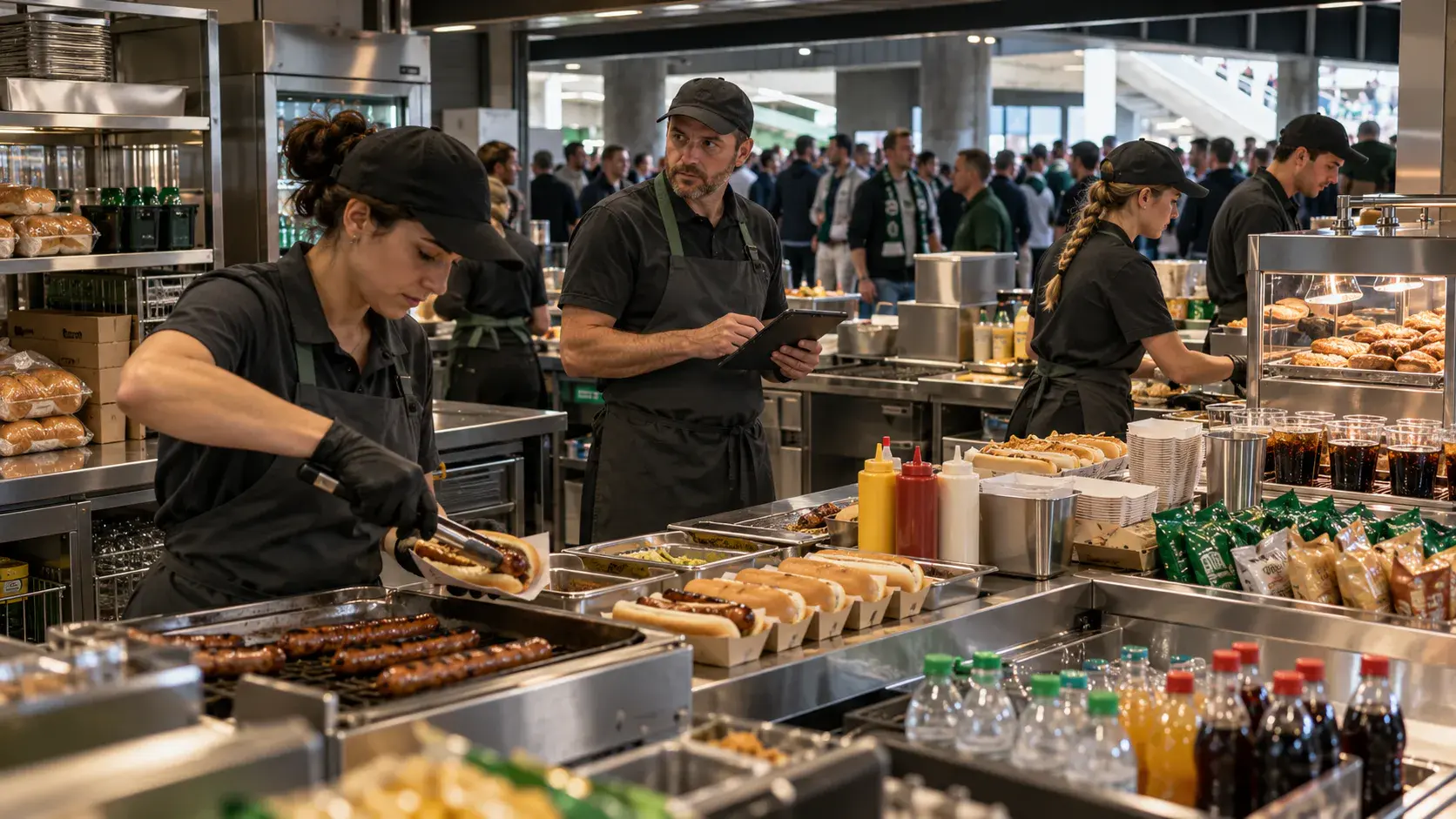
Short service windows make the next decision time-critical.
The product view is based on Counteen’s existing deterministic Events simulation. It uses synthetic matchday data and does not claim an HSV partnership.
| Item | Demand | Plan | Difference |
|---|---|---|---|
| Hot dog · North 29A | 146 | 132 | -14 |
| Fries · East | 118 | 120 | +2 |
| Pretzel · West | 84 | 96 | +12 |
Illustrative values for interface demonstration only.
The current plan exceeds the synthetic stand-level signal.
The synthetic scenario shows pressure at North 29A while nearby capacity remains available.
Preview interaction only. No operational action is sent.
Crowd movement, match phases and stand-level constraints can create shortages at one location while prepared inventory remains elsewhere.
Counteen connects the forecast, feasible production, live operating state and a prioritized Action Center so every proposed intervention carries evidence and remains subject to approval.
The implemented Events simulation carries the same synthetic scenario through forecast, production, inventory, human approval and reporting. Each view answers a different operational question without changing the underlying state.
Inspect demand by interval, stand and product instead of treating the event as one average service period.
Translate demand into production while respecting ingredients, capacity, timing and finished stock already in motion.
Surface bottlenecks, shortage exposure and surplus risk while there is still an operational choice to make.
Review the evidence behind a recommendation before approving, rejecting or dismissing the proposed action.
Use pre-event briefing and post-event reporting derived from the same simulation state and intervention history.